23/10/2026
C4B Research on Social Sustainability Presented at SETAC Europe 2026
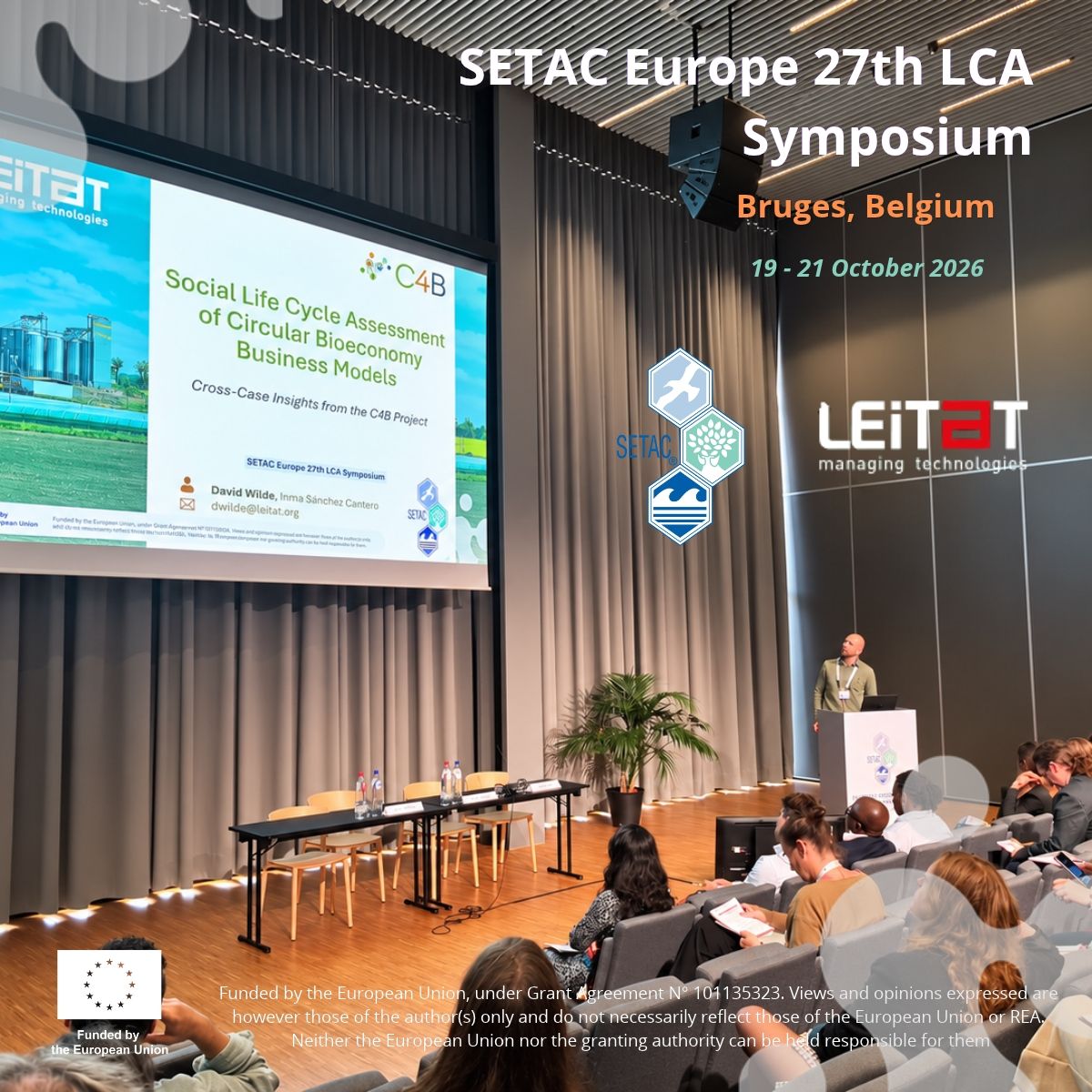
From 19 to 21 October 2026, the C4B project was represented at the SETAC Europe 27th LCA Case Study Symposium in Bruges, Belgium, by project partner Leitat Technological Center.. The international event brought together over 500 participants to exchange knowledge on life cycle assessment, circularity, bio-based systems and sustainability.
David Wilde, Senior Researcher at Leitat, presented “Social Life Cycle Assessment of Circular Bioeconomy Business Models: Cross-Case Insights from the C4B Project” during the scientific session “Advancing and Aligning Life Cycle Approaches for Emerging Bio-Based Systems: Lessons from Algae and Beyond.”
Exploring the Social Impacts of Circular Bioeconomy Business Models
The presentation focused on Social Life Cycle Assessment (S-LCA) research conducted within C4B, drawing insights from the project’s nine circular bioeconomy business-model cases.
David introduced a combined supply-chain and stakeholder-oriented assessment approach, examining how circular bioeconomy activities can generate social risks and benefits across different stages of the value chain.
The cross-case analysis highlighted three main findings:
- Upstream supply chains matter: Social risks often arise more strongly from supply chains supplying other process inputs than from the residual biomass itself.
- Social benefits are not always equally distributed: Different stakeholder groups may experience different levels of benefit from circular business models.
- Governance and scale influence outcomes: The organisation and scale of circular value chains can significantly affect which stakeholders capture the value created.
These findings highlight the importance of considering social impacts alongside environmental and economic performance when assessing circular bioeconomy solutions.
By complementing C4B’s environmental and techno-economic assessments, this research contributes to a more comprehensive understanding of sustainability and supports the development of more responsible and inclusive circular bioeconomy value chains.